

Tell Us About Your Business
Thank you! Your submission has been received!
Oops! Something went wrong while submitting the form.


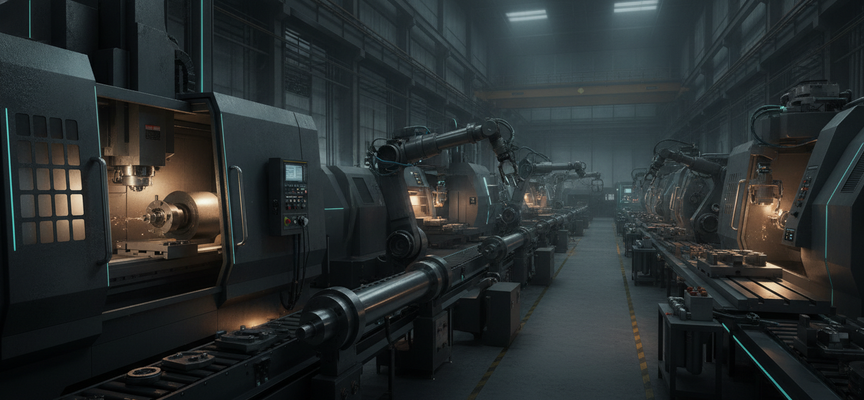
Your machining is precise, your shop floor runs smoothly, yet the sales pipeline feels unpredictable. One month you’re flooded with enquiries; the next, it’s dead silent. You know your CNC machining capabilities are solid, but the right buyers - the engineers, procurement heads, and plant managers who can provide steady work - don’t seem to find you. The sales rhythm depends too much on personal connections. This unpredictability slows growth and keeps you stuck putting out fires.
Lead generation for CNC machining companies isn’t about listing services or hoping referrals show up. It’s about building a system that consistently reaches the right technical decision-makers, qualifies their needs, and keeps conversations moving through long, complex industrial sales cycles. Without that system, even the best CNC machining shop struggles to fill the order book reliably.
→ Leads arrive in bursts, with dry spells that cause concern.
→ Most enquiries turn out to be price shoppers or unqualified buyers.
→ Your sales team wastes time chasing cold leads or waiting on referrals.
→ The founder or a senior leader ends up handling every key sales call.
→ You have a website and do some marketing, but it doesn’t convert into real business.
→ Outreach feels random, with no clear plan for who to contact or when to follow up.
→ You’re unsure if the leads you get are the right decision-makers.
→ Competitors who seem less capable win work because they show up more consistently.
If several of these hit home, the problem isn’t your products or services - it’s how you’re finding and reaching your customers.
Your craft is technical and demanding. You excel in precision setups, toolpath programming, and quality control. But winning business today requires more than machining skill. The buyer journey in CNC machining is long and involves multiple stakeholders - engineers specifying parts, procurement managers negotiating price and terms, and plant heads approving suppliers. These decision-makers don’t just “search and buy” quickly. They need education, trust-building, and timely follow-up.
Most CNC shops hit a wall relying on old personal networks or sporadic inbound enquiries. Sales cycles stretch across weeks or months, and prospects require detailed technical conversations before committing. Without a targeted, multi-channel approach that connects with each buyer persona and keeps the pipeline active, growth stalls. This isn’t a failure of your machining skills - it’s a missing growth engine built for your industry’s buying realities.
Lead generation for CNC machining companies starts with understanding exactly who you’re selling to. Your ideal customers aren’t just “manufacturers” in general - they are engineers, procurement managers, and plant heads with specific needs and pain points. Each has their own buying criteria, timelines, and objections.
For example, engineers care about precision, material compatibility, and delivery timelines. Procurement focuses on price, payment terms, and supplier reliability. Plant managers prioritize uptime and quality consistency. Addressing all these roles requires messaging and outreach tailored to their perspectives.
Next, you need a clear ideal customer profile (ICP) defining the industries, company sizes, and roles that fit your capacity and strengths. Then, mapping decision-makers within target accounts is crucial - knowing who influences and approves purchases lets you focus your efforts effectively.
Lead qualification is another critical step. Not every enquiry is a sales opportunity. Some are testing prices; others lack budgets or timelines aligned with your offerings. A structured qualification process filters out noise, so your sales team spends time only on leads with real potential.
Finally, because CNC machining sales cycles are long and multi-step, consistent follow-up is essential. This means a disciplined cadence across calls, emails, LinkedIn messages, and sometimes SMS or WhatsApp, combined with tracking every interaction in your CRM or sales system. Without this, good leads slip away silently.
Many marketing agencies focus on volume - pushing out large numbers of generic leads at low cost. They target broad buyer personas without deep knowledge of the CNC machining industry or its technical buyers. Their outreach is often a single channel - mass email blasts - that don’t engage engineers and procurement managers who prefer detailed, consultative conversations. Reporting tends to focus on activity metrics like emails sent or calls made, not on qualified pipeline or sales outcomes.
This approach misses the mark for CNC machining companies. You need a partner who understands the complexities of your buyers’ roles and decisions, the importance of multi-channel outreach, and the discipline to manage long, technical sales processes. Without that, lead generation feels like a gamble, and the pipeline stays unpredictable.
Building a reliable lead generation engine for a CNC machining company means running one coordinated operation that combines research, outreach, qualification, and follow-up continuously. MOTM works alongside your team as a cross-functional execution partner who understands the industry and the buyer journey.
First, MOTM helps define your ICP clearly, mapping the industries, companies, and decision-making roles that fit your capabilities. Then, a targeted list of potential customers and decision-makers is built using industry data and research.
Next, outreach runs simultaneously across multiple channels - calls, email, LinkedIn, and sometimes SMS or WhatsApp - to engage prospects in ways they prefer. The messaging isn’t product-heavy but problem-led, addressing the pain points of engineers and procurement managers specifically. This approach improves response rates and relevance.
Every lead is qualified before being passed to your sales team, filtering out unready or irrelevant enquiries. MOTM tracks all interactions and follow-ups in a management information system (MIS) reviewed weekly with your team, ensuring no lead is lost in handoff or forgotten during long sales cycles.
This operation runs continuously, not as isolated campaigns. It creates a steady, visible pipeline of qualified conversations, reducing founder dependency and giving your sales team a reliable flow of opportunities aligned with your strengths. MOTM acts as an extension of your team, not just a vendor, bringing engineering understanding into every step.
A typical CNC machining company that clarifies its ICP, maps decision-makers, and implements multi-channel outreach with disciplined follow-up usually moves from scattered, unpredictable enquiries to a steadier flow of qualified conversations within a quarter. This steady pipeline supports better sales forecasting and less founder dependency, allowing growth beyond personal networks.
Building and running this properly is a lot to manage. If you want to see how similar CNC machining companies have approached it, I’m happy to share insights and examples to help you understand what’s involved.
Been in this situation myself. Happy to share what worked - no pitch, just a conversation.
If your business has good capability but growth feels slower than it should, a short strategic discussion may reveal practical next steps.

